Grammar

___________________________________________________________________________________________________________________
Activities from our session
Our Teacher's presentation of teaching Grammar:
As usual, I liked the activity we were given from our teacher. She taught us Grammar through a story and it was so inspiring that I created a similar activity myself. Learning past simple through a story.pdf
The activity was again divided into some stages so we had to listen to the story, guess missing words in the story, pronounce some words dealing with the grammar, help the teacher with the story, listen again supported by gestures, match and drill the form. One of the most important things to attract the students was to use an interesting or funny story and it worked, because the teacher had chosen the good one. It was also very important to learn the grammar in context - in the story/sentences - in order to remember it better. I must say that I am able to create this kind of activity for my students but the presentation provided by our teacher is something I have to learn. The body language, the neverending smile because she was so self-assured - she was like a fish in the water. In my opinion, every teacher should be patient to achieve these abilities because it could only be learned from experience.
Books and other sources I use
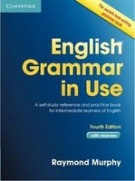
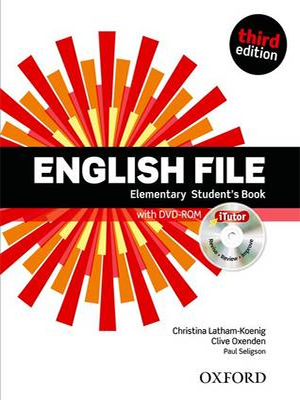
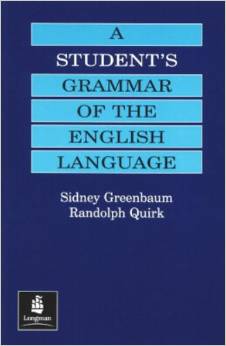

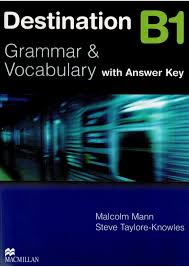
From my point of view, the best source for explaining (not practising) grammar rules is this web page: https://www.helpforenglish.cz/
I have never found a better explanation of grammar than on this website so I use it very often in my own teaching and I also recommend it to my students.
For practising grammar I would like to recommend this website: https://www.agendaweb.org/
There are a lot of exercises connected not only with grammar but also with vocabulary and ..... probably everything :-). I think that students like these kinds of activities, because it is more comfortable for them to fill in the gaps, there are also pictures and the right answer could be activated only after one click.
An article about "Teaching Grammar":
www.teachingenglish.org.uk/article/planning-a-grammar-lesson
___________________________________________________________________________________________________________________
Inductive and Deductive Teaching
Two very distinct and opposing instructional approaches are inductive and deductive. Both approaches can offer certain advantages, but the biggest difference is the role of the teacher. In a deductive classroom, the teacher conducts lessons by introducing and explaining concepts to students, and then expecting students to complete tasks to practice the concepts; this approach is very teacher-centred. Conversely, inductive instruction is a much more student-centred approach and makes use of a strategy known as ‘noticing’. Let’s take a closer look at the differences between inductive and deductive instruction, and find out how noticing can be used in the language classroom to better facilitate student learning.
What is deductive instruction?
A deductive approach to instruction is a more teacher-centered approach. This means that the teacher gives the students a new concept, explains it, and then has the students practice using the concept. For example, when teaching a new grammar concept, the teacher will introduce the concept, explain the rules related to its use, and finally the students will practice using the concept in a variety of different ways.
According to Bob Adamson, “The deductive method is often criticized because: a) it teaches grammar in an isolated way; b ) little attention is paid to meaning; c) practice is often mechanical.” This method can, however, be a viable option in certain situations; for example, when dealing with highly motivated students, teaching a particularly difficult concept, or for preparing students to write exams.
What is inductive instruction?
 In contrast with the deductive method, inductive instruction makes use of student “noticing”. Instead of explaining a given concept and following this explanation with examples, the teacher presents students with many examples showing how the concept is used. The intent is for students to “notice”, by way of the examples, how the concept works.
Using the grammar situation from above, the teacher would present the students with a variety of examples for a given concept without giving any preamble about how the concept is used. As students see how the concept is used, it is hoped that they will notice how the concept is to be used and determine the grammar rule. As a conclusion to the activity, the teacher can ask the students to explain the grammar rule as a final check that they understand the concept.
Source:
https://www.educ.ualberta.ca/staff/olenka.bilash/Best%20of%20Bilash/inductivedeductive.html
___________________________________________________________________________________________________________________
How do I use deductive and inductive teaching?
I am absolutely sure that I use deductive teaching in my classroom. At the very beginning of my teaching I followed Teacher's book where are the instruction how to learn a particular grammar. Every unit with a new grammar in student's book starts with a short article using the "new sentences" with the particular grammar but it's only a short article so I would say that it's only a weak attempt to use inductive teaching, because right after the article there is a section with explanation of the grammar rules.
Nowadays, I don't follow the Teacher's book when teaching grammar because I found better sources but still I use deductive teaching. I read a short article with my students and then I explain how to form positive sentences, negative sentences, questions. After that I go through many exercises using an interactive board, videos, worksheets etc.
I would like to say that I have a strong feeling that inductive teaching could be better for most students and I am going to learn it in order to be able to use it with my future students. The students I am teaching now have to learn the grammar rules quickly so it's only about drilling and drilling and that's why the inductive teaching is not very useful for them.
